The terms corporate meeting and conference are sometimes used interchangeably.
Both can include presentations, executives, remote participants, panels and multiple days of programming. But the scale and production workflow can be very different.
Understanding that difference helps planners build a technical scope that fits the event instead of overproducing a simple meeting or under-supporting a complex conference.
What is a corporate meeting?
Corporate meetings are often focused gatherings built around communication, decision-making, training or organizational alignment.
Examples can include:
- executive and leadership meetings;
- board meetings;
- sales meetings;
- town halls;
- internal training;
- management retreats;
- annual or quarterly business reviews; and
- recognition or leadership programs.
The production emphasis is frequently clarity, reliability, professionalism and making it easy for presenters to communicate.
Typical production priorities for corporate meetings
Speech Clarity
Microphones, loudspeaker coverage and live mixing that make every presenter easy to understand.
Presentation Reliability
Playback, confidence monitors, presenter support and a plan for last-minute deck changes.
Hybrid Participation
Remote speakers, video conferencing, streaming or recording when the audience extends beyond the room.
Executive Rehearsal
Time to test content, microphones, camera framing, walk-ups and show flow before attendees arrive.
What is a conference?
A conference generally adds scale or complexity: more attendees, more rooms, more speakers, more content, more stakeholders or a longer program.
Examples include association conferences, user conferences, annual corporate conferences, educational symposiums, sales kickoffs and multi-day general-session programs.
A conference may also include exhibitors, sponsors, breakout rooms, networking events and parallel program tracks.
Typical production priorities for conferences
Large-room audio and video
As attendance grows, system coverage becomes more complex. Large-format LED or projection, cameras and IMAG can become important so attendees throughout the room can see and hear clearly.
Multi-room coordination
Breakout rooms create their own schedules, presentation workflows, staffing and equipment requirements. The production plan has to support the room program without losing control of the main show.
Stage design and branding
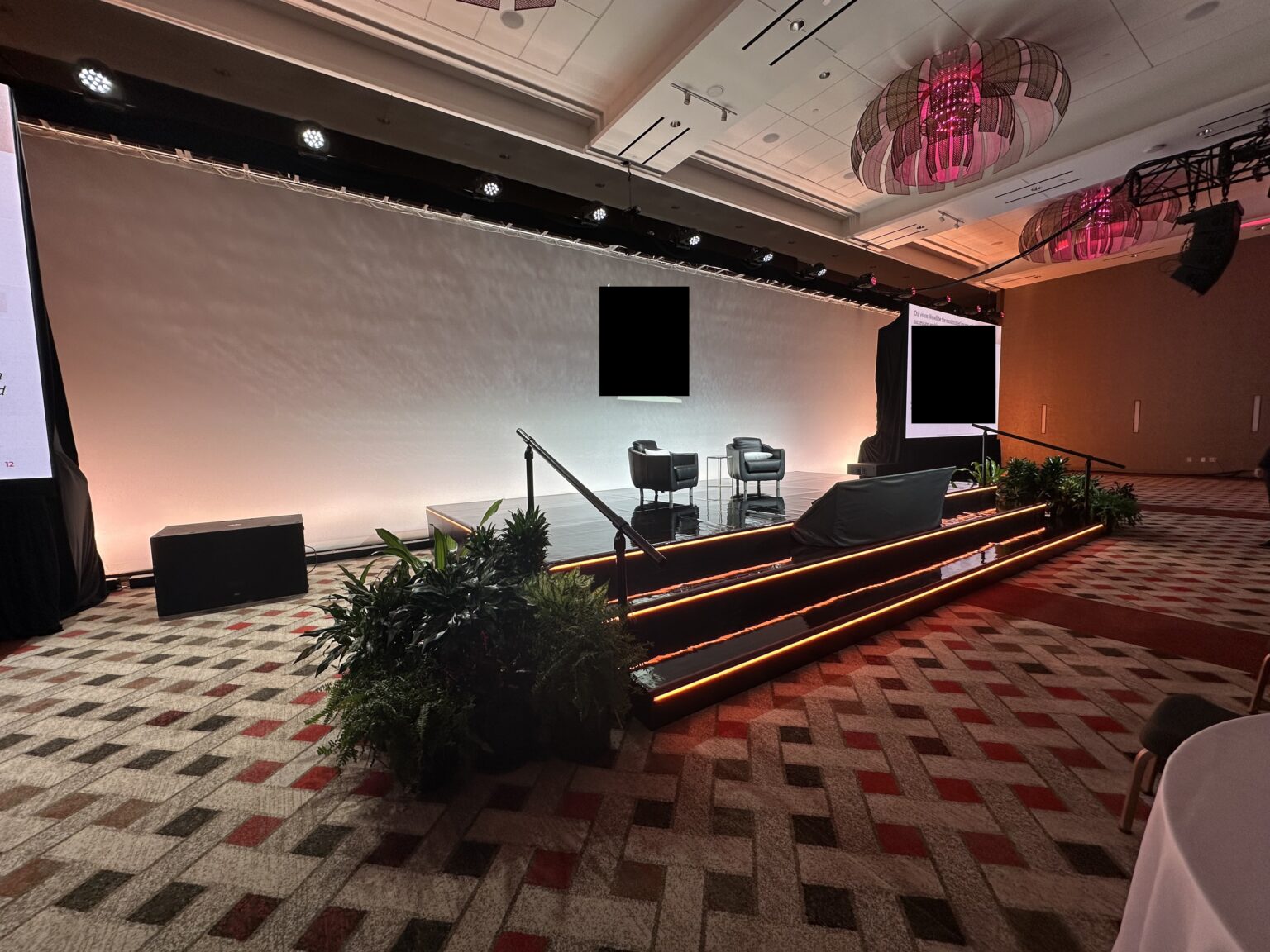
A conference general session may function as a major brand environment. Scenic, LED, lighting and graphics can be designed together rather than treated as separate layers.
Cameras, recording and streaming
Conference content often needs to reach attendees outside the room or live beyond the event. Camera and recording workflows should be planned alongside the in-room production.
Show leadership
More departments and simultaneous workstreams increase the need for clear project management, technical direction, cueing and production communications.
Meeting vs. conference: a practical comparison
| Production element | Corporate meeting | Conference |
|---|---|---|
| Audience | Often small to medium | Often medium to large |
| Rooms | One or a few | General session plus multiple breakouts can be common |
| Audio | Focused on speech and presentation | Larger coverage and more simultaneous systems |
| Video | Presentations, displays, remote participation | Large-format display, cameras, IMAG, playback, recording |
| Lighting | Presenter/camera visibility and polished room look | Stage, scenic, branding, cameras and programmed show looks |
| Staging/scenic | Can be minimal or executive-focused | Often more developed as a general-session environment |
| Staffing | Smaller technical team may be sufficient | More departments and operators may be required |
| Content workflow | Fewer presenters/decks | More speakers, sessions, graphics and concurrent content |
The event title does not determine the production scope
A 60-person executive meeting can be technically complex if it includes global remote participants, multiple cameras, custom scenic, confidential content and a high-visibility leadership team.
A larger conference can sometimes have a relatively straightforward technical plan.
That is why production should be scoped around the actual program:
- What does the audience need to see and hear?
- How many rooms operate at once?
- How many presenters and content sources are involved?
- Are cameras or streaming required?
- How much rehearsal is needed?
- How important is custom stage/scenic design?
- How much venue coordination is required?
Hotel and convention-center rules can change either plan
Corporate meetings and conferences are frequently produced in hotels and convention centers.
Venue-controlled rigging, power, internet, installed systems, local labor and room-access rules can influence both budget and schedule.
Our Hotel & Convention Center AV Production resource explains how Jx2 coordinates those requirements with venue and in-house teams.
When does a meeting become a full production?
There is no single attendance threshold.
The production becomes more involved when the event requires multiple technical disciplines, significant rehearsal, cameras, complex content, custom staging/scenic, multiple rooms, tight schedules or executive-level show management.
The key is recognizing that complexity early enough to plan for it.
Jx2 supports both ends of the spectrum
Jx2 can support focused corporate meetings as well as larger multi-day conferences.
The objective is not to put the largest system into every room. It is to build the appropriate production around the event's audience, content, venue, schedule and goals.
Explore Full-Service Event Production, Audio & Video Production and our real-world project portfolio.