
If you have ever attended a polished live event, you have experienced the work of a production team even if you never saw most of it.
The microphones worked. Presentations appeared when they were supposed to. Cameras found the right speaker. Lighting supported the room. Video content played on cue. The stage fit the event. Crew knew where to be. Rehearsal uncovered issues before attendees arrived.
That outcome is not just an equipment rental. It is a production process.
Event production starts before show day
The most important production work often begins weeks or months before equipment arrives at the venue.
Pre-production can include:
- defining the technical scope;
- reviewing the venue and room;
- building production schedules;
- planning load-in, rehearsal, show and strike;
- coordinating audio, video, LED, lighting, staging and scenic;
- reviewing content and playback requirements;
- planning cameras, recording, streaming or broadcast;
- developing floor plans or technical layouts;
- coordinating venue-controlled services such as rigging, power or internet;
- staffing the event with the appropriate technicians and production leadership; and
- identifying risks before they become show-site problems.
Venue AV and an independent production company can both have a role
Hotels, convention centers and other venues often have in-house or preferred event-technology teams. Those teams may know the building extremely well and may control or efficiently provide services such as installed systems, rigging, power, internet or local labor.
An independent production company can represent the client's broader show requirements and coordinate those venue resources as part of the complete production.
The relationship does not need to be adversarial. In many events, the best plan combines Jx2 production leadership with services that are required or simply more practical to obtain from the venue or another local provider.
For more detail, see our guide to Hotel & Convention Center AV Production.
What does the production team actually manage?
Production Planning
Scope, budgets, schedules, venue requirements, technical design, staffing, logistics and department coordination.
Audio
Microphones, loudspeakers, consoles, playback, intercom and system operation designed around the audience and room.
Video & LED
Presentation systems, cameras, IMAG, switching, playback, recording, projection, displays and LED video walls.
Lighting
Stage visibility, camera-aware lighting, scenic lighting, branded environments, cueing and temporary architectural lighting.
Staging, Rigging & Scenic
Stage systems, technical support structures, rigging coordination, scenic elements, drape and physical event environments.
Show-Site Execution
Load-in, system checks, rehearsals, cueing, live operation, troubleshooting, strike and venue coordination.
Technical direction connects the departments
As events become more complex, somebody has to connect the individual technical departments.
Depending on the production, roles can include a project manager, producer, technical director, show caller/director, audio leads, lighting leads, video engineers, playback/graphics operators, camera crew, staging/rigging specialists and general technicians.
The exact titles vary by show. What matters is clear responsibility.
Who owns the production schedule? Who coordinates changes with the venue? Who makes sure scenic does not conflict with LED or rigging? Who handles the show flow during rehearsal? Who is the meeting planner calling when something changes five minutes before doors?
Good production structure answers those questions before the pressure is on.
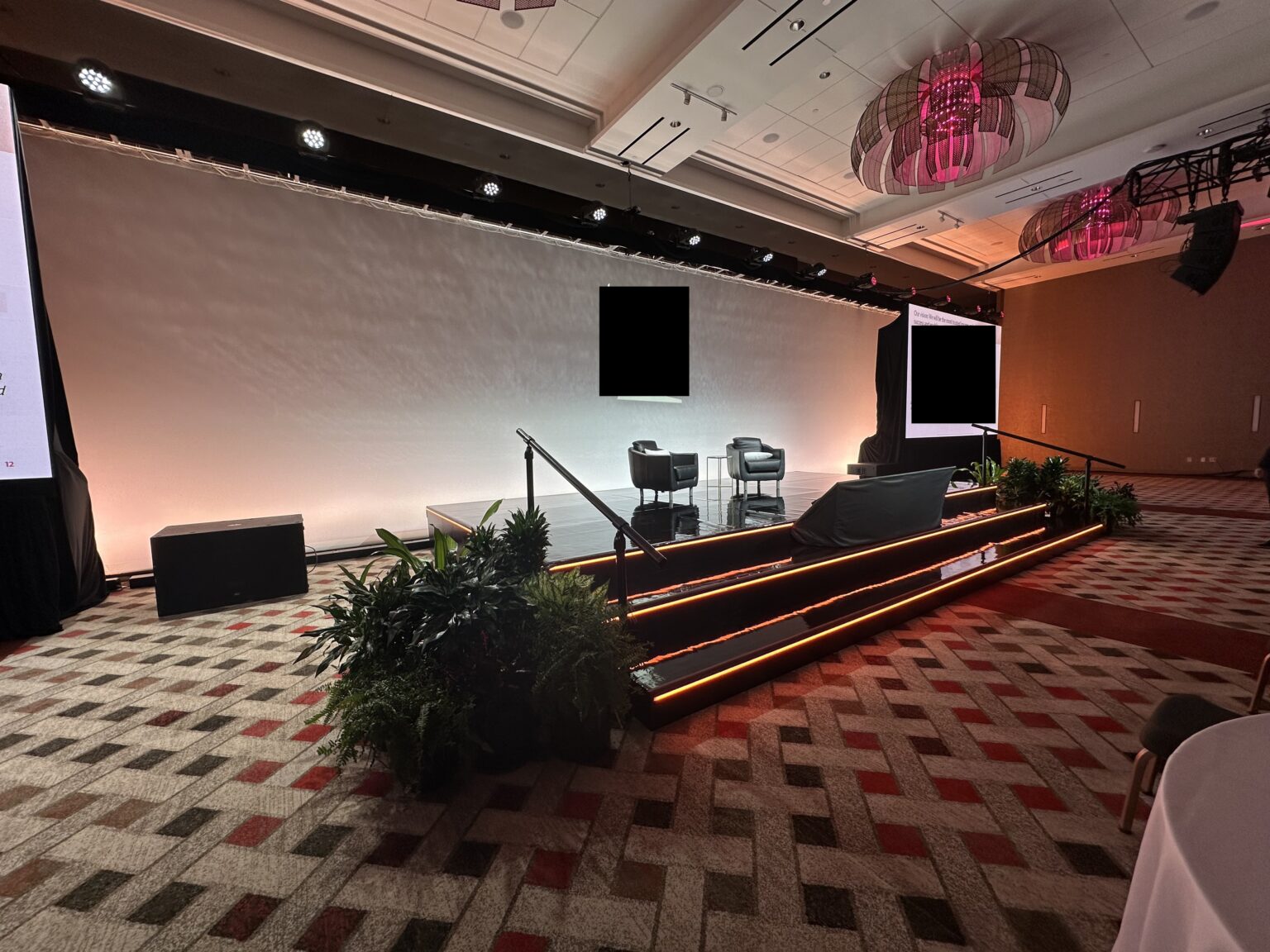
Rehearsal is part of production
For presentation-heavy or executive events, rehearsal is where the technical systems and program become one show.
It gives the production team time to confirm:
- speaker entrances and exits;
- microphone choices;
- presentation and video playback;
- camera framing;
- lighting looks;
- confidence monitors;
- graphics;
- walk-up music and cues;
- timing between segments; and
- changes that need to happen before attendees enter.
When should you bring in a production partner?
Not every event needs a large production team.
But a production partner becomes increasingly valuable when the event has multiple technical disciplines, high executive visibility, custom stage or scenic design, multiple rooms, cameras/IMAG, streaming, significant content, a tight setup schedule or a venue that requires substantial coordination.
The earlier the production team is involved, the more useful it can be in venue review, budgeting and technical planning.
One production point of contact reduces handoffs
One of the biggest advantages of a full-service production model is coordination.
Instead of the planner separately translating requirements among audio, video, lighting, scenic, rigging, the hotel and local vendors, the production partner can manage the authorized technical scope as one workflow.
That does not remove the planner from decisions. It reduces the number of technical handoffs the planner has to personally manage.
What should you look for in an event production company?
- clear pre-production process;
- experience with events similar to yours;
- real project examples;
- transparent scope and labor assumptions;
- strong venue coordination;
- technical leadership on show site;
- appropriate backup and risk planning;
- ability to explain technical decisions in practical terms; and
- a team that treats the event as a show, not simply an equipment order.
Jx2 Productions provides full-service live-event production across audio and video, LED, lighting, staging and rigging, scenic, broadcast and show-site execution for corporate meetings, conferences, commencements, galas, concerts and other live productions.