A hotel proposal can look complete while leaving important production questions unanswered.
The guest-room block, food and beverage, meeting-room rental, concessions and basic event schedule may all be clearly defined. But if the event also requires LED video, cameras, staging, lighting, rigging, dedicated internet, streaming, rehearsals or a substantial load-in, the technical operating environment deserves the same attention.
That is especially true when the property has an in-house or preferred event-technology provider.
As we explain in Can You Bring Your Own AV Company to a Hotel?, the terms preferred, in-house and exclusive do not have one universal operational meaning across every property. Some hotels allow outside production companies while controlling specific services such as rigging, power, internet or installed systems. Other properties may impose additional requirements or fees.
The goal is not to turn venue contracting into a technical interrogation. It is to discover the rules early enough to make informed decisions.
Why ask AV questions before the hotel contract is final?
Once an agreement is signed, the room, dates and operating conditions may be substantially locked.
If you discover afterward that the ballroom has a compressed setup window, the rigging plan requires house labor, internet is priced separately, or your production company cannot use a particular installed system, the event may still be completely workable—but the budget, schedule or production design may have to change.
By asking early, you give the hotel, the production company and the planner an opportunity to solve those issues before they become surprises.
15 AV and event-technology questions to ask the hotel
1. May we use our own audiovisual or event-production company?
This is the starting point.
Ask the property directly whether an outside production company is permitted and whether that permission applies to the entire production scope or only particular services.
Why it matters:
You need to know whether you have a production choice before comparing proposals or bringing a longtime production partner into the planning process.
2. Is the in-house provider preferred, exclusive or required only for specific services?
Do not treat these terms as interchangeable.
A property's audiovisual provider might be preferred for the overall show while certain services are exclusive. Another venue may permit a completely outside production team subject to its vendor policies.
Ask the hotel to identify the exact services that are required or exclusive, if any.
Why it matters:
This defines the production boundary and prevents assumptions on both sides.
3. Can we receive the outside-vendor or outside-AV policy in writing?
If the property has a written production, vendor or outside-AV policy, request it early and send it to your production partner.
The document may address insurance, credentialing, access, supervision, electrical requirements, equipment movement, house-system use and fees.
Published property policies demonstrate why this matters. For example, the Bethesda Marriott event menu states that its Event Technology department is the preferred AV provider but allows clients to choose another audiovisual company, subject to the hotel's outside-AV policy and applicable fees. Review the Bethesda Marriott event menu and outside-AV policy.
Why it matters:
The actual written policy is more useful than relying on a general understanding of what “in-house AV” usually means.
4. Are there outside-vendor, liaison, patch, supervision or access fees?
Ask whether using an outside production company creates any additional property charges.
Depending on the venue, those charges can be associated with supervision, technical liaison, installed-system access, power, internet, labor or other services.
Do not assume a fee exists—and do not assume it does not.
Why it matters:
A meaningful comparison between proposals requires the total landed production cost, including charges that may be invoiced separately by the hotel.
5. What insurance and vendor documentation are required?
Ask what certificate of insurance, additional-insured language, workers' compensation documentation, vendor forms, safety documents or other approvals are required, and when they are due.
Why it matters:
A production company can be fully prepared technically and still lose valuable setup time if required vendor documentation has not been accepted before arrival.
6. Who controls overhead rigging?
If anything may be suspended from the ceiling, ask who owns the rigging process.
Questions can include:
- Who supplies the riggers?
- Who approves the rigging plan?
- Are point diagrams available?
- Is engineering review required?
- Are motors, truss or other components venue-controlled?
- Is house supervision required?
- What deadlines apply to rigging submissions?
Why it matters:
Rigging affects stage design, LED placement, lighting positions, sightlines, labor and the overall production schedule.
7. Who controls event power and electrical tie-ins?
Ask what electrical service exists in the room and what must be ordered separately.
For larger productions, clarify whether the venue controls company switches, tie-ins, electricians, temporary power distribution or specific electrical connections.
Why it matters:
LED, lighting, audio, video and broadcast systems must be designed around available and permitted electrical infrastructure.
8. Who provides internet, and what exactly can we order?
Do not reduce this question to “Does the hotel have Wi-Fi?”
Ask about:
- wired connections;
- dedicated bandwidth;
- upload and download requirements;
- public versus private networks;
- custom SSIDs;
- static IPs or other production networking needs;
- testing windows; and
- who provides technical support during the event.
Convention-center operators routinely treat connectivity and other building services as separate event-service workstreams. The Massachusetts Convention Center Authority, for example, directs planners through event-services teams for building services and production requirements. See the BCEC planner-services information.
Why it matters:
Streaming, hybrid participation, remote presenters and production communications can depend on connectivity that is very different from guest internet.
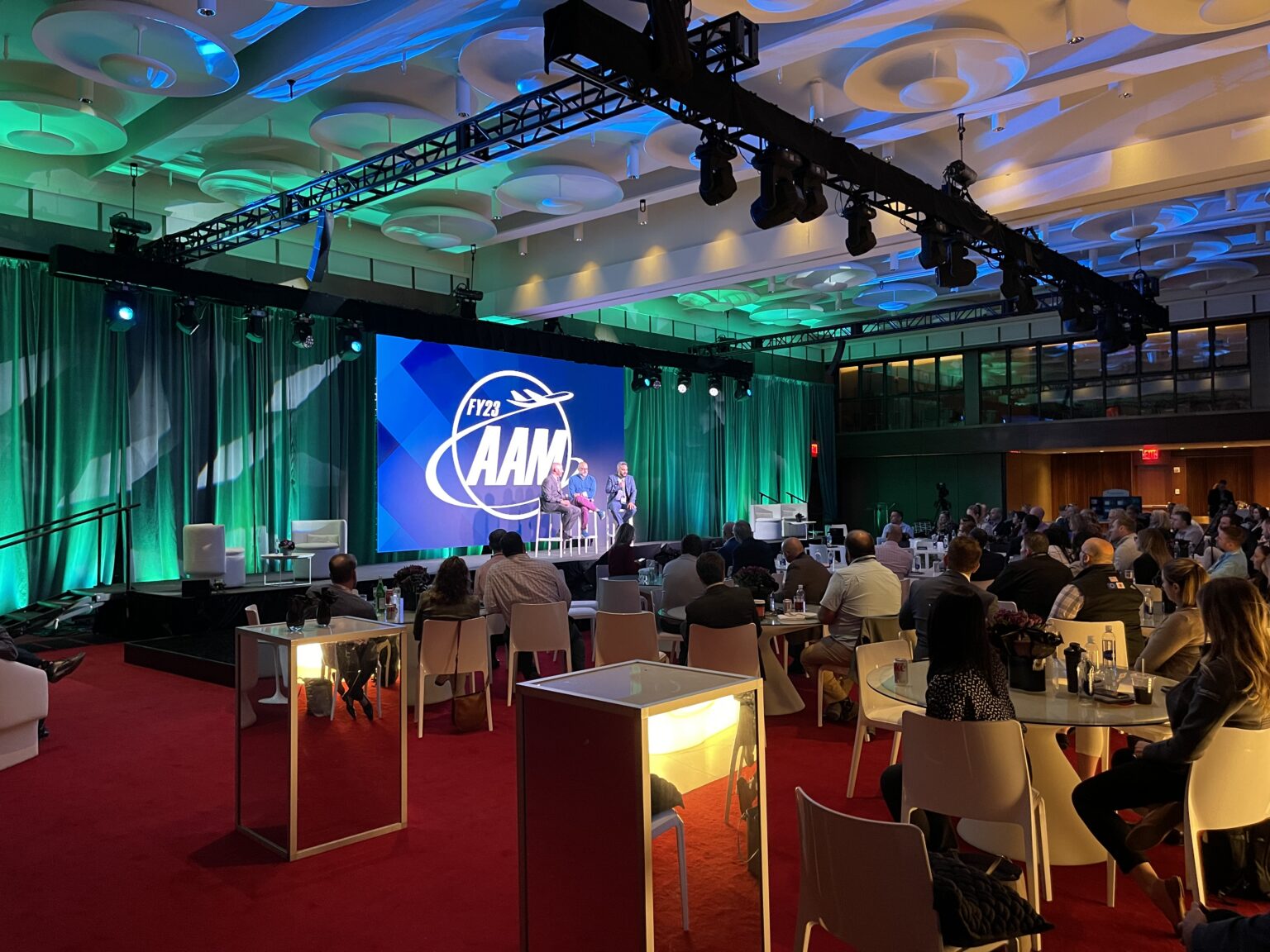
9. Can our production company use the hotel's installed audio, video or display systems?
Hotels can have permanent speakers, projectors, displays, routing, digital signage or other infrastructure that may be useful to the event.
Ask whether those systems are available to outside production teams, whether a house technician is required, and whether there are patch or access fees.
Why it matters:
Using existing infrastructure can sometimes simplify a production. In other cases, limitations or access rules may make a temporary system the better approach.
10. What are the real load-in and load-out rules?
Ask how production equipment physically enters and leaves the building.
Clarify:
- loading-dock location;
- dock reservation procedures;
- truck restrictions;
- freight-elevator dimensions and access;
- push distance from dock to ballroom;
- parking;
- security procedures;
- storage;
- move-in and move-out hours; and
- whether other events share the same route.
Why it matters:
Logistics directly affect trucking, labor calls and how much production can realistically be built in the available time.
11. When do we actually get the room?
The event may begin Tuesday morning, but when does production get access to the ballroom?
Ask for the earliest permitted production access—not simply the guest program start time.
Also ask whether a prior event, room turn or banquet schedule could change the access window.
Why it matters:
A six-hour build and a three-hour build are different production plans. Room access can determine crew size, equipment choices, scenic complexity and whether an overnight build is required.
12. When can we rehearse?
Ask whether the room is available for speaker rehearsal, content checks and full technical rehearsal before doors open.
For executive meetings, awards programs and presentation-heavy conferences, rehearsal can be an important part of the production—not an optional extra that can always be squeezed into the final minutes.
Why it matters:
Rehearsal time allows presenters, content, cameras, audio, playback, lighting and show flow to be tested together.
13. Are any hotel, house or union technicians required?
Ask whether the venue requires specific labor for rigging, electrical, internet, system patching, freight movement, loading, supervision or other production activities.
Also clarify labor minimums, overtime rules and call structures where applicable.
Why it matters:
Required labor can materially affect both schedule and budget, even when most of the production is being provided by an outside company.
14. What production-related costs will be billed directly by the hotel or house provider?
Create a list of production expenses that will not appear on your independent producer's proposal.
Possible categories can include rigging, power, internet, required labor, security, storage, parking, dock services, installed-system access, engineering review or local equipment.
Why it matters:
You cannot compare two production approaches accurately if some costs sit in the hotel master account and others sit in the production-company proposal.
15. Who is the production contact at the venue after the contract is signed?
Identify the person or team that will work with your production company during the technical advance.
That might be a conference-services manager, event-services manager, engineering contact, in-house AV representative, rigging coordinator or another venue stakeholder.
Why it matters:
A clear communication path helps keep room changes, technical requirements, schedules, orders and approvals from being lost between departments.
Put the answers into one production worksheet
Once you have the venue answers, do not leave them scattered across emails.
Give the same information to the meeting planner, production company and relevant venue teams.
| Workstream | What to document |
|---|---|
| Outside production | Permitted scope, approvals, fees and restrictions |
| Rigging | Provider, labor, deadlines, point information and review requirements |
| Power | Available service, provider, tie-ins and ordered requirements |
| Internet | Bandwidth, wired drops, network requirements and support |
| House systems | Available systems, access rules, technician requirements and fees |
| Labor | Required house/union labor, minimums and overtime assumptions |
| Logistics | Dock, elevators, truck rules, storage, parking and security |
| Room access | Load-in, rehearsal, doors, show and strike windows |
| Direct venue costs | Items billed separately from the production-company proposal |
| Contacts | Venue, in-house provider and production points of contact |
The answers may influence which ballroom—or which hotel—you choose
Not every issue is a deal breaker.
A property can have substantial house-service requirements and still be the right venue. A compressed load-in can be manageable with enough planning. Venue internet may be the best connectivity solution. House rigging may be exactly what the production requires.
The purpose of asking these questions is not to eliminate venues that have rules.
It is to know the rules before the event is designed around a different set of assumptions.
Let the production company help evaluate the answers
Meeting planners should not have to translate every technical detail themselves.
If AV, LED, scenic, staging, streaming or broadcast is a meaningful part of the event, bring your production partner into the venue discussion early enough to review the answers.
Jx2 can help identify which items materially affect the show, which venue services should be incorporated into the production plan, and where additional information is needed.
Our Hotel & Convention Center AV Production page explains how Jx2 works alongside hotel and convention-center teams rather than treating the relationship as an all-or-nothing choice.
One production point of contact can make the next phase easier
Once the venue is selected, the technical advance begins.
When authorized by the client, Jx2 can coordinate production scope, room requirements, schedules, rigging, power, internet, installed-system interfaces, local labor, local equipment and show-site production requirements with the venue and in-house teams.
Some of those services may be purchased directly from the property. Others may be supplied by Jx2. Others may come from approved local resources.
The important part is that the production plan treats them as one event.