Venue sourcing often begins long before the event's final technical scope exists.
You may know the city, approximate attendance, general session schedule and budget range while still deciding what the stage will look like, whether LED or projection is appropriate, how many cameras are needed, or what the final scenic environment will become.
That is normal.
But “the show is not designed yet” does not mean production has nothing useful to contribute during site selection.
In fact, some of the most expensive production problems are created when a venue decision is made before anyone asks whether the room can support the event assumptions.
The production partner sees the venue differently
A planner, attendee and production team can walk into the same ballroom and notice completely different things.
The production team is looking at:
Sightlines
Can attendees see the stage, screens or LED from the planned seating areas? Do columns, chandeliers or room geometry create limitations?
Ceiling & Rigging
What can be suspended, where are the points, what loads or house procedures apply, and does the room support the intended design?
Power
What electrical service is available, where is it located, who controls it and what may need to be ordered?
Internet
Can the property support streaming, remote presenters, show networking or other production connectivity requirements?
Loading
How do trucks reach the building, what is the push to the room, what elevator restrictions exist and when can equipment move?
Time
When is the ballroom actually available for load-in, system testing and rehearsal—not simply when the meeting begins?
A beautiful room can still be the wrong production room
A ballroom can look perfect in a sales tour and still create avoidable production compromises.
Perhaps the stage wall is narrower than expected. Perhaps the ceiling height limits the scenic concept. Perhaps an ultra-wide screen changes the available seating. Perhaps the room is scheduled for another event until late the night before. Perhaps the load-in path adds hours of labor. Perhaps the internet solution is more complex than the planning budget assumed.
None of those conditions necessarily makes the venue bad.
They simply belong in the decision.
Production can help compare candidate venues
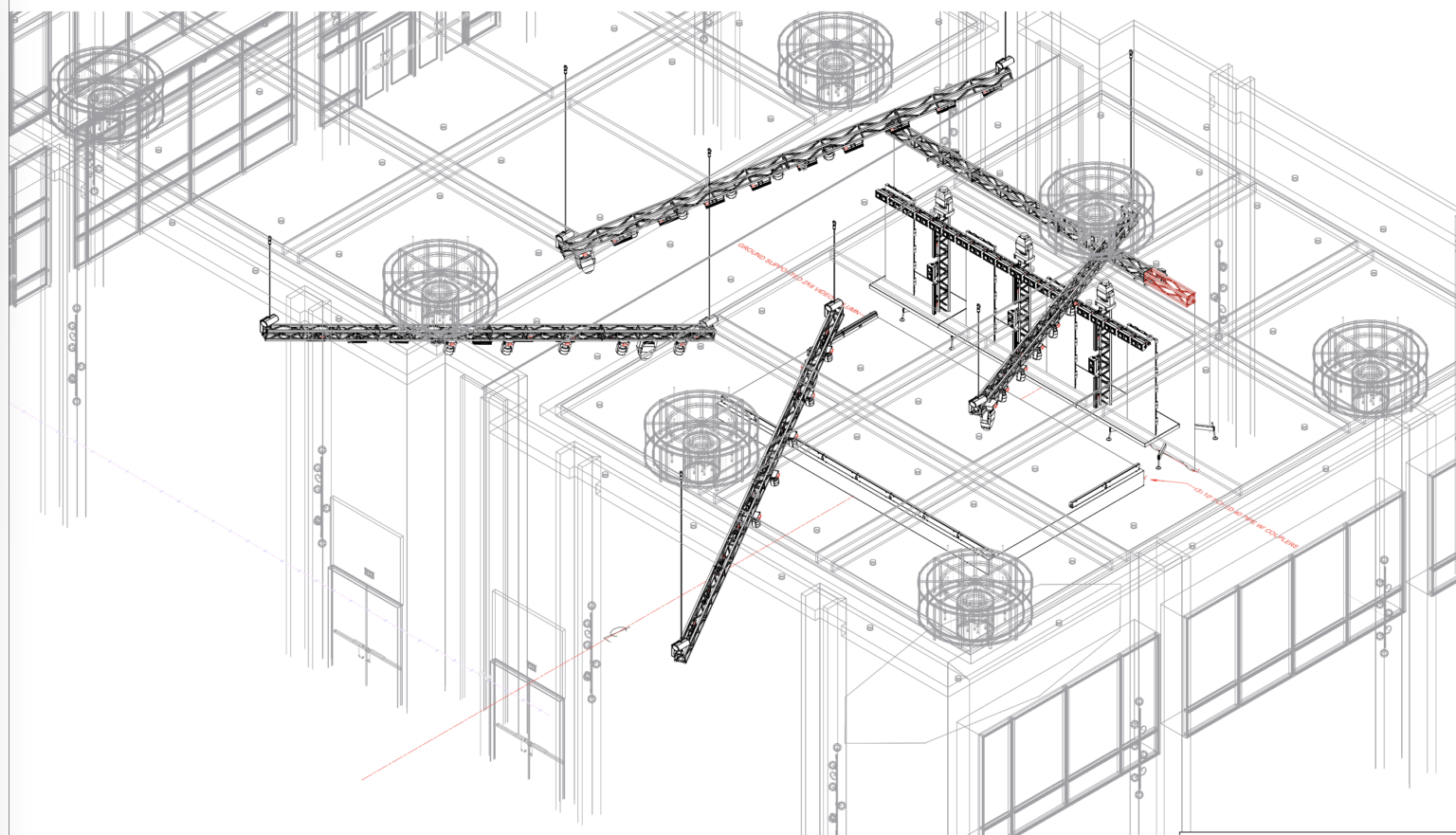
If you are considering two or three properties, your production partner can help identify how each one affects the technical plan.
That does not mean producing a complete design package for every candidate hotel.
A practical early review can focus on the variables that materially change cost, risk or feasibility:
- room dimensions and ceiling height;
- stage and screen/LED placement;
- rigging availability;
- electrical infrastructure;
- internet/network options;
- loading and freight routes;
- setup and rehearsal windows;
- breakout-room proximity;
- installed systems that may be useful;
- outside-vendor policies; and
- required house services.
Venue choice can affect production budget more than equipment pricing
Meeting planners often focus on ballroom rental and food-and-beverage economics during site selection.
Production costs can move substantially based on the operating conditions of the property.
A room with easy loading and a full setup day may require a different labor plan than a room with a midnight turn. A venue with useful installed infrastructure may eliminate temporary equipment. Another venue may require substantial rigging, power or local labor.
That is why the 15 AV & event-technology questions to ask before signing a hotel contract belong in the sourcing process.
Choosing a production partner early does not mean locking the final scope early
This distinction is important.
An organization may know who it wants to produce the event long before it knows exactly what the event will require.
You may be a year out. The venue may still be under consideration. The agenda is incomplete. The stage design has not started. Speakers are unknown.
The early relationship can focus on planning criteria rather than a final equipment order.
Those criteria can include:
- the approximate production/AV budget;
- the intended scale and audience;
- event-design expectations;
- pre-production needs;
- creative/content requirements;
- site visits;
- anticipated venue/third-party costs; and
- the responsibilities the production partner will begin owning during planning.
The final SOW and detailed technical proposal can follow when the event is sufficiently defined.
Early production involvement improves hotel-contract questions
When a production partner is involved early, the questions to the hotel can become more specific.
Instead of simply asking “Can we bring outside AV?” the discussion can become:
- Which services are exclusive?
- Can Jx2 interface with the installed house system?
- Who supplies rigging and what is the approval deadline?
- Where is production power located?
- Can the ballroom be available for load-in the day before?
- What dedicated bandwidth can be provisioned?
- Can the dock support the expected trucks?
Specific questions generate more useful answers.
Your production partner can work with the venue you choose
Early involvement should not turn venue sourcing into a contest between the hotel and the production company.
Jx2 routinely expects to work with venue and in-house teams.
Depending on the property, the final production can incorporate venue-controlled rigging, power, internet, installed systems, required labor or local equipment while Jx2 remains the client's production point of contact.
See Hotel & Convention Center AV Production for a detailed explanation of that collaborative model.
What if the venue is already signed?
Then production begins with the venue you have.
There is still significant value in bringing the production team in early enough to advance the building, identify required services, confirm room access and build a realistic schedule.
The point is not that production must always precede the hotel contract.
The point is that the later production enters the process, the more existing decisions it must work around.
Who benefits most from choosing production early?
This approach is especially useful for:
- large corporate meetings;
- annual meetings;
- sales kickoffs;
- leadership conferences;
- awards programs;
- association conferences;
- multi-day general sessions and breakouts;
- events with significant scenic or LED design;
- hybrid or broadcast programs;
- recurring events moving between cities; and
- programs where AV represents a meaningful portion of the overall event budget.
Start with the event goals, not an equipment list
If you involve Jx2 before the venue is selected, you do not need to arrive with a list of microphones and screens.
Tell us what you know:
- event purpose;
- city or candidate cities;
- anticipated attendance;
- general program structure;
- executive or presenter expectations;
- creative ambition;
- streaming/broadcast needs;
- candidate venues;
- approximate production budget; and
- what worked or did not work last year.
That is enough to begin asking better production questions.