
When people think about event lighting, they often picture color: uplighting around a ballroom, moving fixtures at a concert or a dramatic stage wash behind a keynote speaker.
Those visual elements matter. But lighting does much more than make a room look interesting.
It helps the audience know where to look, makes people readable to cameras, supports the event's brand language and changes the way a physical space feels.
Lighting directs attention
One of lighting's most important jobs is visual focus.
The room may contain hundreds or thousands of visual elements: scenic, screens, tables, exits, architecture, people and signage. The lighting design helps establish what deserves attention at a particular moment.
During a keynote, that may be the speaker. During an awards segment, it may be the recipient and walk-up path. During a gala reveal, it may be the scenic environment. During a concert, focus may move continuously between performers and the larger stage picture.
Speaker lighting is not the same as room lighting
A ballroom can feel bright to the eye and still light a presenter poorly.
House fixtures are generally designed to illuminate the room, not necessarily to create consistent front light for a keynote stage or to support professional cameras.
Presenter lighting should account for stage position, audience sightlines, screen/LED placement and the angles the cameras will see.
This becomes especially important when the event is being recorded, streamed or shown on IMAG screens.
Lighting and video production have to work together
Camera Exposure
Presenters need enough controlled light to stay properly exposed without forcing the camera team into compromises that affect image quality.
LED & Projection Balance
Stage lighting should coexist with the brightness of LED or projection so the speaker and displayed content feel like one visual composition.
Color
Color decisions should support scenic and brand design without creating distracting or unflattering results on people.
Consistency
Lighting cues and camera views should be rehearsed together when the program depends on polished transitions.
Lighting supports the brand without turning the room into a logo
Branding can be subtle.
Color, scenic illumination, textured light, architectural accents and programmed transitions can make the room feel connected to the organization without repeating a logo on every surface.
For corporate meetings and awards programs, lighting can help the physical room match the visual language already being used in graphics, LED content, scenic and presentation materials.
Different events require different lighting priorities
Corporate meetings and conferences
Visibility, camera performance, brand consistency and smooth transitions are usually central. Lighting may need to support keynotes, panels, walk-up moments, awards, video playback and audience interaction.
Galas and fundraisers
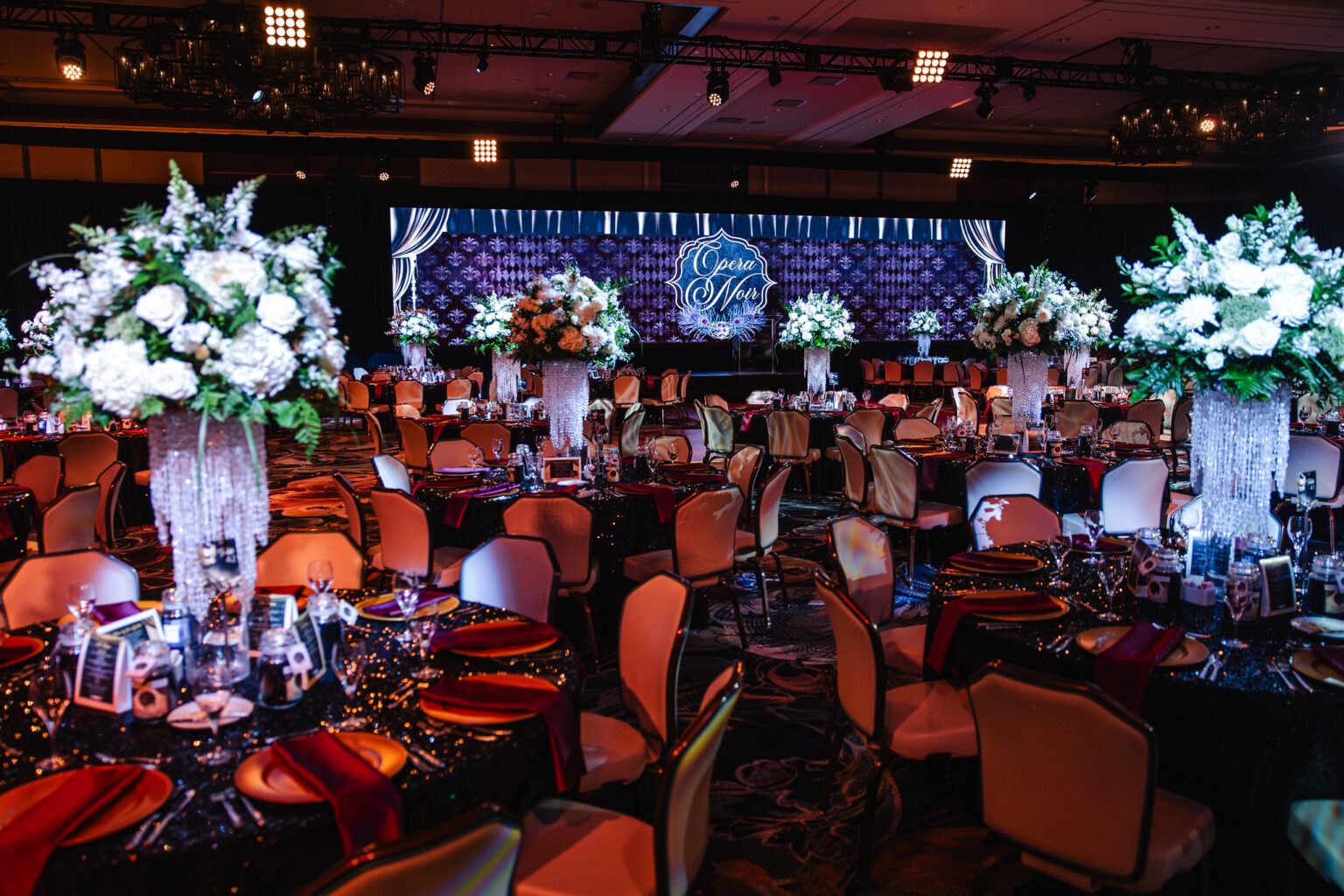
Lighting can transform a ballroom while still supporting speeches, auction moments, award presentations and cameras. Temporary architectural uplighting, scenic lighting and stage lighting can help define the room.
Commencements
Large audiences, long sightlines, broadcast/IMAG cameras and outdoor conditions can make lighting part of a larger technical plan involving LED, cameras and staging.
Concerts and festivals
Lighting becomes a performance system, working with music, video, staging and atmosphere to shape the live experience.
Why relying only on house lights can limit an event
Venue lighting can be extremely useful for room illumination and operational needs.
But the installed system may not be designed for the specific stage location, camera positions, scenic treatment or visual transitions your event requires.
The question is not whether house lighting is “good” or “bad.” It is whether the installed lighting can support the production goals.
Sometimes the answer is yes. Sometimes temporary event lighting should supplement it. Sometimes the most practical design combines both.
Lighting is also about control
A live event changes from moment to moment.
Pre-show, keynote, video playback, panel, awards, entertainment and walk-out may each need a different visual state.
Programmed lighting lets the room change with the show rather than staying in one generic look for the entire event.
Those transitions should support the program—not call attention to the lighting console.
Plan lighting with staging, scenic, rigging and power
Lighting decisions affect other departments.
Fixtures need positions. Positions may require truss or venue rigging. Scenic can block beams or provide surfaces to light. LED brightness affects balance. Electrical service affects the system design. Cameras influence color and exposure.
That is why Jx2 coordinates Event Lighting as part of the larger event production plan rather than treating it as a decorative afterthought.
What should you discuss with your lighting provider?
- What does the audience need to see?
- Will cameras or IMAG be used?
- What is the stage and scenic design?
- What brand colors or visual references matter?
- What installed venue lighting is available?
- What rigging positions are possible?
- What electrical service is available?
- What moments need programmed lighting changes?
- Is temporary architectural uplighting part of the environment?
- How will lighting interact with LED or projection?